Utilizing High School Students’ Insights to Transform Library Space
Even as the role of the library evolves, it remains a place for patrons to explore and read books. As I transitioned from K-8 to high school librarianship, working diligently to reopen a long-shuttered school library and rebuild a reading culture, I judged myself against infographics featuring other spectacular high school library statistics around circulation that I saw shared on social media. In an effort to look beyond below-average circulation data while reopening our library, I decided to focus my inquiry during the Lead by Learning Library Leader Community of Practice on ways I could better promote and measure reading for pleasure.
In order to gather more input, Lead by Learning supported me to turn to my students through focal student interviews to gather more data about my question and the challenge I was facing. I interviewed students who frequent the library, including some of my Library Teaching Assistants (TAs), who shared a unique perspective, spending one class period in the space each day. I gleaned a number of epiphanies from these conversations. Despite the national downward trends in reading, students shared that they and everyone they know sees themselves as readers. They just might not make use of the library to access books.
One of my TAs pointed out that ease of access matters. Even though I had massively updated the collection to include contemporary, popular titles from the past decade, fiction was located along the far back walls–furthest from the entrance and bordering the instructional space used during a class visit, so any student browsing books during class visits had everyone else staring at them. She also pointed out that during the times when students have breaks to read (such as before and after school, as well as lunch), the library is dominated by groups studying or chilling–the environment was not conducive to reading.
While I was conducting interviews, I also participated in another professional learning community offered by Lead by Learning, which focused on artificial intelligence. As part of this program, I experimented with prompting AI about this line of inquiry. I found AI reminded me of more ideas to try. It helped me provide students with lists of possible library initiatives for them to choose from. I found that AI gave me another thought partner at the table, which can be especially helpful in an oftentimes siloed occupation.
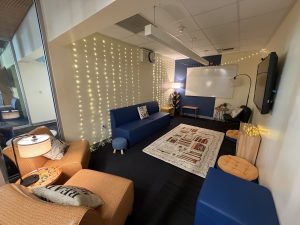
As a result of all the feedback I collected, my TAs and I went ahead and reorganized the entire collection and swapped the fiction and nonfiction sections (moving fiction towards the front of the library and our more dated nonfiction to the far back), and transformed one of the study rooms (the size of a conference room) into a dedicated reading room. Using grant money from our local education foundation, we purchased an array of furniture to create a comfortable, inviting space and staged it with many popular books on hand selected by students, fairy lights, bookish throw pillows, and a plush rug. It is now equipped with a neon reading sign which, when turned on, means the space is reserved just for reading–and no other uses.
While I worked this spring to reorganize the collection and create this reading room, I began collecting other data about library usage. Each day during the 30-minute lunch period for over a month, I tallied how many students were in the space at the 20-minute mark, as well as how many browsed the collection, checked out books, and read books. While I found the number of students entering and using the space was high, engagement with books and reading was very low. However, this data collection led me to notice trends in reading engagement at other times of the day. I realized that most checkouts take place in the moments before school starts. I also observed interactions with the collection throughout the day because I was attuning my attention to it. I realized that there is more than just summative data to tell the story of my school’s reading culture. In a society that often focuses on standardized test data, this experience radically transformed my relationship with collecting and utilizing data.
After Advanced Placement testing finished using the library space this May, we hosted a red ribbon ceremony to officially open the reading room. In the remaining days of school, it was an absolute joy to see a stream of students and staff members reading in the library. I ended my second year with triple the circulation of my first year and renewed energy to build on these successes in the year to come. With this inquiry cycle concluding, I look forward to engaging and welcoming new groups of students to expand library reading initiatives even further.
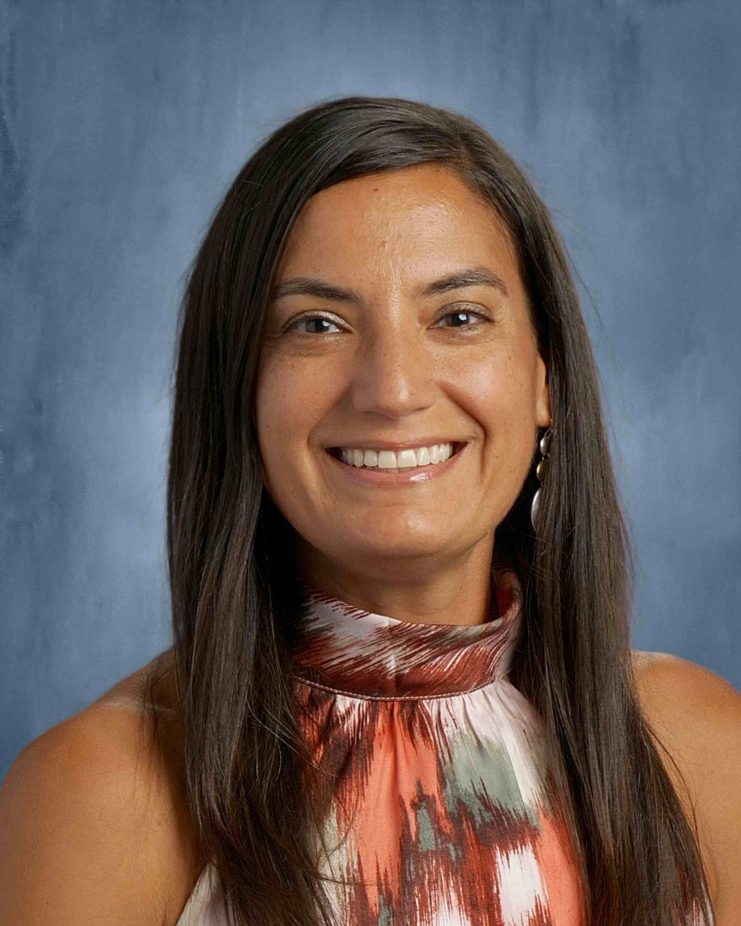
 Mia Gittlen is the Milpitas High School Librarian in California, after having served as a K-8 librarian, a classroom teacher, and an instructional technology teacher on special assignment. She enjoys volunteering with the California School Library Association and the American Association of School Librarians. She also organizes a Bay Area School Librarian Book Club and a monthly fitness meetup as the founder of Active Educators.
Interested in partnering with Lead by Learning to build the schools students need? Connect with a member of our team to learn more about our range of partnerships designed to reach your goals for student and adult learning.