How an After-School Site Coordinator Creates the Conditions for Distributive Leadership and Learning: A Conversation with Eduardo Barragan of Vallejo City Unified
At Lead by Learning, we believe that learning liberates individuals and systems so they can thrive and succeed, and that learning happens both during and after the school day. We partner with extended day program leaders, including Site Coordinators, to create conditions for distributive leadership and deeper learning for their front-line staff and students.
The role of a Site Coordinator, like the role of a site principal, is complex, and the quality of the after-school program depends on this person’s leadership. Eduardo Barragan, of Vallejo City Unified School District (VCUSD), sat down with Lead by Learning Lead Program Facilitator Brooklyn Joseph to talk about how distributive leadership supports his program to thrive and cultivate the leadership of both the students and staff in his program.
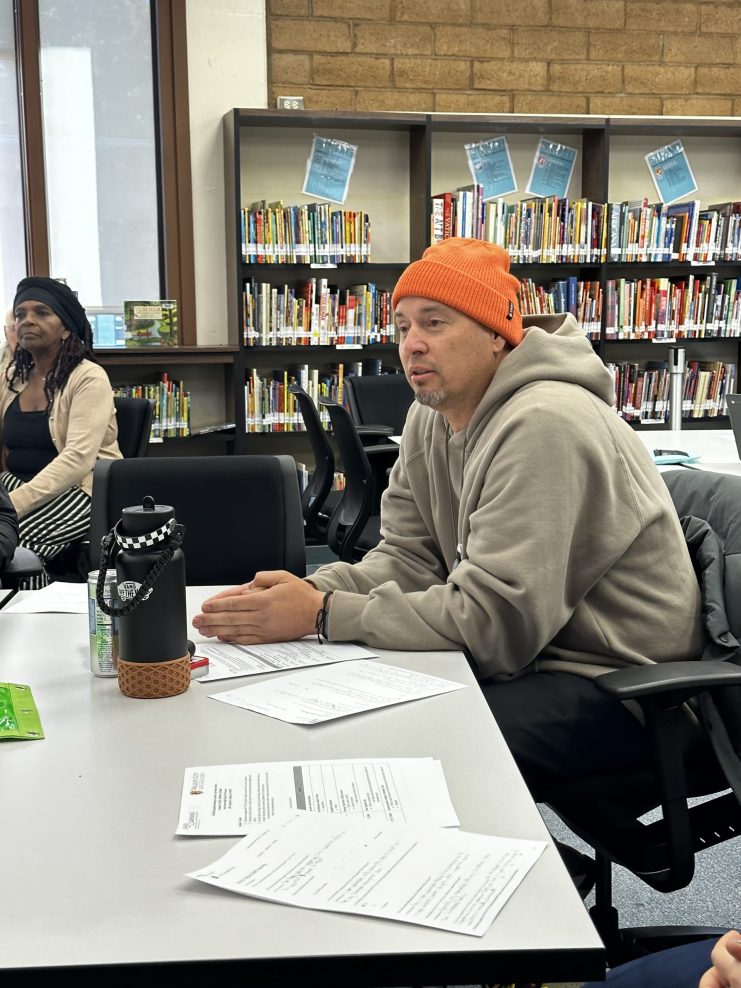
Eduardo, known to all as Eddie, is a veteran Site Coordinator in VCUSD, boasting 16 years at his site, and is deeply respected by his peers. He is very comfortable in his role and has unlocked something that other coordinators are striving for: distributive leadership and thriving.
As part of VCUSD’s partnership with Lead by Learning, we engage in site visits throughout the school year to support the leadership of each Site Coordinator in their unique school site context. After the visit, we had the opportunity to sit down with Eddie and learn more about how he created the culture he has today, as well as what it looked like before and what it takes to get there.
Eddie defines distributive leadership as coaching and support, and to him, “Making the person you are working with become that leader. Developing their confidence so they can do the job assigned to them and be consistent.”
Tell us more about how you distribute leadership. What does this coaching and support look like when you distribute leadership?
Asking [staff and students] about their fears and what they feel uncomfortable doing. We work on that and really focus on how to turn that fear into an area of confidence. We start small, practicing in smaller settings or with smaller groups until they feel comfortable with larger groups and larger tasks. I often model and then have them join in as their comfort grows. At first, they mirror me and emulate what I want them to do. Now, many of my staff who initially didn’t want to speak to our whole program are now the ones who are always on the mic.
Consistency is key. If I expect my student leaders and staff to show up when they are supposed to. I have to be consistent so that they see me model what I am asking them to do. This goes with follow-through, so if you say you are going to do something, you do it. This is how you build trust over time. This goes with the kids, too, when it comes to behavior, rewards, or incentives, with everything you do, you have to follow through and be consistent.
We know your program is unique in that both staff and students lead classes for other students. What have you found to be the impact of having a distributive leadership model for staff and students?
By giving students the ability and courage to be able to lead their peers in classes, students have been able to self-regulate.
It started with Destiny [former student]. We talked about all of the ways she could be a leader. She got to decide what she was interested in teaching. She started with one class, four days a week, with 5 students, which was transformational. Seeing her confidence grow over time changed my entire approach to the program. All of a sudden, I saw what was possible after giving one person a small bit of power when it comes to teaching a classroom; it made that possible for other student leaders to set up.
We saw this confidence not only in the afterschool program, but also had an impact on the school day. They started sharing more and stepping up in a variety of spaces they are in.
Beyond that, it made my job super easy, it didn’t feel like a job anymore, and it became fun for me!
What was your day-to-day before implementing this model?
I didn’t know how to delegate anything. I was doing so many things, which caused me to not feel confident in their ability to do the things. I did the snack count, I did the sign-in sheets, I was doing everything even when I had staff who could do those things. So I had to let my guard down and let go of some control and think about how I can empower my staff to do their job so that I didn’t overexert myself and get burned out.
A big part of this was letting go of my way of doing things and being okay with them figuring out their way. I had to be open to seeing what they came up with and to their own individual approach.
This led to my realization that I could do the same process with students!
Today, what does your site look like with a distributive leadership model for both students and staff?
Everyone has an assignment and knows what they need to do; they know that I trust them and that I will be there to support them. In addition to building strong relationships, this is why everyone is so invested in the program, which basically runs seamlessly without me.
Staff and students do everything from picking up sign-in sheets, setting up speakers, distributing snacks, running classes, etc, all while having fun because we feel like we are part of a family so we easily support each other as needed.
I am like a CEO, and I just oversee everything, but I am not responsible for running the program.
Destiny, that student who started leading classes with her peers, now trains the front-line staff and is supporting them to become leaders in their own right. She talks to parents and students, and supports staff to do the same. I really don’t have a lot to do anymore. I have set everyone up to be successful, and that should be the goal of every Site Coordinator. We should be working our way out of a job and coaching people up! At the end of the day, I want my students to run my site, supported by my crew and myself, and all the decisions I make revolve around that!
How did you create the conditions for the distributive leadership model to be successful?
It always starts with trust. I ask questions and don’t make assumptions or judgments because I want to make everyone feel like a human being and that they are being heard. Regardless of whether it is a team member or a student, I empower them to speak their truth. When they are running a class, they are in charge and I back them up. If I don’t feel I can back them up or disagree with how they handled something, I discuss it with them and coach them to think about other solutions or what skills they need to develop to deal with the particular situation in the future.
The bottom line is that I give people authority to do what I do. I never tell people I am their boss.
It can even be something as small as how you refer to the people you work with. I call them my “crew” or “coworkers” or “peers” and never refer to them as “my staff.” It sounds cliché, but I treat people how I want to be treated. I realized that when I speak to them, I need to make them feel comfortable. I treat them as an individual and not a worker. This is why people always want to come back to our site.
In my program, we constantly encourage a growth mindset. Everyone knows that you might not know how to do it yet, but we will help you get there. I do this by checking in with folks every day to see how they are doing and asking what I can do to support them.
What advice would you give to other Site Coordinators who want to experience the joy you are experiencing as a Site Coordinator through a true Distributive Leadership model?
I would tell them to make sure they follow what I call my four core. We have talked about parts of the four core already, but this is the foundation of everything I do:
- Build Strong Relationships: It all starts with treating your team, students, and families as human beings. I talk to my team about how I want to be talked to and remind them to talk to students the way they wish they were talked to as a student. This includes not yelling and always speaking in a calm, collected manner.
- Clarity & Consistency: You have to have clarity about your own system and a structured schedule so that you can empower adults and students to facilitate those systems and schedules. Then you have to be consistent. You have to show up and be there, stay present, keep coaching, and be available to support as needed.
- Trust: Once you establish clarity and consistency, you have to trust your coworkers and your students. They are smarter and more capable than you think. You have to give people an opportunity to show what they can do, and you will be pleasantly surprised.
- Support: My crew and our students know that I am always there to support them. Whether it is with a new task, a new class, or a difficult situation, they know that they can come to me for anything and that I am not going to judge them or respond negatively because I have their best interest at heart.
How does your approach encourage innovation?
When kids come up with ideas for classes that they want to run, we are able to offer far more choices for classes within our program. They have to develop a whole project plan and they are teaching classes that are more innovative and connected to the interests of their peers than anything I, or even my crew, can come up with. The classes are grounded in their passions and help them develop their own skills while they develop the skills of their peers at the same time.
Some examples of student-led courses have included science, sign language, dance, theater, art, and piano.
It is clear that Eddie’s program is one of success, and is still victim to the misconceptions others in the field of education (and outside education) often hold about extended day programming.
How have you helped shift the narrative for people, including teachers, about after-school programs?
Some teachers and principals think about after-school programs as just glorified childcare, but when they visit our program, they are pleasantly surprised by what they see and the types of enrichment we are providing. They see kids engaging in activities of their choice and being invested in their own learning and development or they see 100 kids sitting quietly in the cafeteria when that doesn’t happen easily during the school day. I believe that this is because kids feel respected in after-school programs, sometimes in a way they don’t feel during the school day.
We have teachers from the school day telling kids they are going to talk to me about the behavior in the classroom, and that helps kids make different choices because they don’t want to disappoint me. This is from the relationships that my team and I have developed with all of our students.
Creating an environment that welcomes and encourages brave, bold professional growth is at the center of Eddie’s after-school program and his leadership. This exemplifies a culture of learning. By centering strong relationships, trust, clarity, consistency, and support, Eddie’s program shines, and his students and staff return year after year.
Interested to learn more about Lead by Learning’s partnership with Vallejo City Unified Expanded Learning program? Read more in our recent Case Study.
Are you an Expanded Learning Leader looking to partner? Reach out to talk to a member of our team about how to develop a culture of learning and distributive leadership at your sites.